The Cosmology and Mythology of Dragon Ball
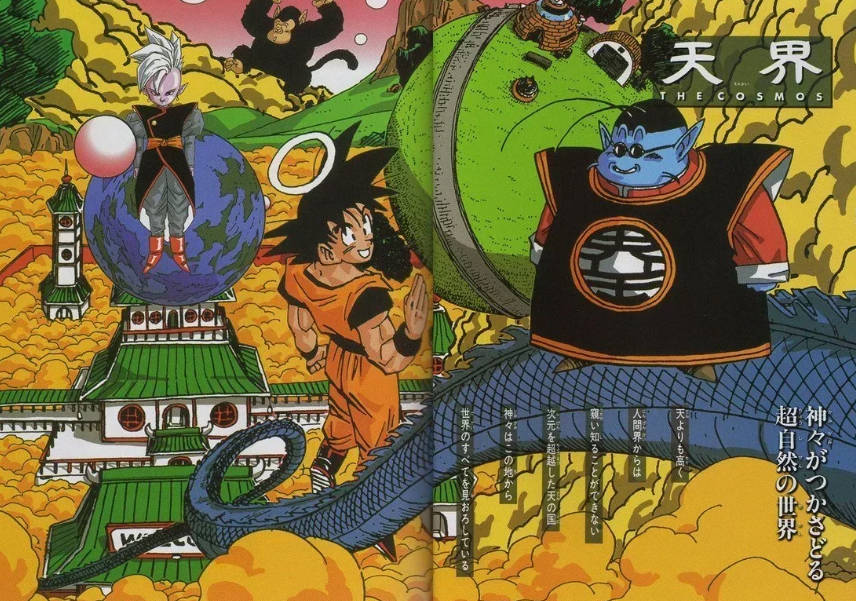
Exploring the Vast Universe and Mythical Elements of the Dragon Ball Franchise
Dragon Ball is not just about epic battles and powerful characters—it’s also about a rich and complex cosmology and mythology that has evolved throughout the series. From the seven Dragon Balls themselves to the Gods of Destruction and the multiverse, Dragon Ball has created a vast and fascinating universe that has captivated fans around the world. In this article, we’ll explore the cosmology and mythology of Dragon Ball, and how it has evolved from the early days of the series to the present.
The Foundations: The Dragon Balls and Their Origins
The Dragon Balls are the central MacGuffin of the Dragon Ball franchise, and their origins and powers have evolved throughout the series.
Key Elements:
-
The Original Dragon Balls: The original Dragon Balls were created by the Namekian Grand Elder Guru, and they have the power to grant any wish, with some limitations.
-
The Namekian Dragon Balls: The Namekian Dragon Balls, created by Guru’s predecessor, have similar powers to the Earth Dragon Balls but can grant three wishes instead of one.
-
The Black Star Dragon Balls: The Black Star Dragon Balls, introduced in Dragon Ball GT, are more powerful than the regular Dragon Balls but have a dangerous side effect—if they are not returned to their home planet within a year, the planet where they were used will be destroyed.
-
The Super Dragon Balls: The Super Dragon Balls, introduced in Dragon Ball Super, are massive Dragon Balls scattered throughout the multiverse that can grant any wish without limitations.
-
The Eternal Dragons: Each set of Dragon Balls is linked to an Eternal Dragon—Shenron for the Earth Dragon Balls, Porunga for the Namekian Dragon Balls, and Super Shenron for the Super Dragon Balls—who is responsible for granting the wishes.
The Earth and Its Inhabitants
The Earth is the primary setting of the Dragon Ball franchise, and it is home to a diverse range of inhabitants, including humans, Saiyans, Namekians, and other alien races.
Key Locations:
-
West City: West City is a major metropolitan area in Dragon Ball, and it is home to Bulma and the Capsule Corporation.
-
Kame House: Kame House is the home of Master Roshi, located on a small island in the middle of the ocean.
-
The Lookout: The Lookout is a floating platform above the Earth, and it is home to Kami, Mr. Popo, and later Dende.
-
Goku’s House: Goku’s house is located in the countryside, and it is home to Goku, Chi-Chi, and their children Gohan and Goten.
-
Other Locations: Dragon Ball features numerous other locations on Earth, including the World Tournament Arena, the Hyperbolic Time Chamber, and the Red Ribbon Army’s headquarters.
The Afterlife and Other Dimensions
Dragon Ball features a complex afterlife system and numerous other dimensions, each with its own unique characteristics and inhabitants.
Key Dimensions:
-
The Other World: The Other World is the afterlife in Dragon Ball, and it is home to King Yemma, the Snake Way, and the four Kais.
-
Heaven: Heaven is a peaceful realm in the Other World where righteous souls go after death.
-
Hell: Hell is a realm of punishment in the Other World where evil souls go after death.
-
The Hyperbolic Time Chamber: The Hyperbolic Time Chamber is a dimension with different time flow, where one day inside equals one year outside.
-
The Room of Spirit and Time: The Room of Spirit and Time, introduced in Dragon Ball Super, is a similar dimension to the Hyperbolic Time Chamber but with different properties.
-
The World of the Kais: The World of the Kais is a realm above the Other World, and it is home to the Supreme Kais and the Grand Supreme Kai.
The Saiyan Race and Their History
The Saiyans are a warrior race from the planet Vegeta, and their history and culture have been explored throughout the Dragon Ball franchise.
Key Elements:
-
The Saiyan Homeworld: The Saiyan homeworld was originally Planet Sadala, but it was destroyed, and the Saiyans relocated to Planet Vegeta, which was later destroyed by Frieza.
-
Saiyan Culture: Saiyan culture was centered around strength and battle, with Saiyans constantly fighting and conquering other planets.
-
Saiyan Transformations: Saiyans have the ability to transform into more powerful forms, including the Great Ape transformation and the Super Saiyan transformation.
-
The Saiyan-Tuffle Conflict: The Saiyans came into conflict with the Tuffles, the original inhabitants of Planet Vegeta, and eventually conquered the planet.
-
The Destruction of Planet Vegeta: Frieza destroyed Planet Vegeta out of fear that the Saiyans would eventually overthrow him, leaving only a handful of Saiyans alive.
The Gods and Deities of Dragon Ball
Dragon Ball features a complex hierarchy of gods and deities, each with their own roles and responsibilities in the universe.
Key Gods:
-
Kami: Kami is the Guardian of the Earth, responsible for maintaining balance and protecting the planet from threats.
-
King Kai: King Kai is the Kai of the North Galaxy, and he is responsible for overseeing the planets in his galaxy.
-
The Supreme Kais: The Supreme Kais are the gods of creation, responsible for creating life and maintaining balance in the universe.
-
The Gods of Destruction: The Gods of Destruction, introduced in Dragon Ball Super, are responsible for destroying planets and civilizations that have become stagnant or corrupt.
-
The Angels: The Angels, introduced in Dragon Ball Super, are attendants to the Gods of Destruction, and they are some of the most powerful beings in the universe.
-
Zeno: Zeno, introduced in Dragon Ball Super, is the Omni-King, the most powerful being in the multiverse, responsible for maintaining balance across all universes.
The Multiverse and Its Universes
Dragon Ball Super introduced the concept of the multiverse, which consists of 12 universes, each with its own set of gods and inhabitants.
Key Universes:
-
Universe 7: Universe 7 is the primary universe in Dragon Ball, and it is home to Earth, the Saiyans, and the other main characters.
-
Universe 6: Universe 6 is a parallel universe to Universe 7, and it is home to Champa, Vados, and the Saiyans of Universe 6.
-
Universe 11: Universe 11 is home to Jiren, the Pride Troopers, and Belmod, the God of Destruction of Universe 11.
-
Other Universes: Dragon Ball Super features numerous other universes, each with its own unique characteristics and inhabitants.
-
The Tournament of Power: The Tournament of Power, introduced in Dragon Ball Super, is a competition between the universes to determine which ones will be erased by Zeno.
The History of the Universe
Dragon Ball has established a complex history of the universe, from its creation to the present day.
Key Events:
-
The Creation of the Universe: The universe was created by the Supreme Kais, who seeded it with life and set the laws of physics.
-
The Rise of the Saiyans: The Saiyans rose to power as a warrior race, conquering planets and establishing their dominance in the galaxy.
-
The Rule of Frieza: Frieza established himself as the ruler of a vast empire, controlling numerous planets and races through fear and intimidation.
-
The Destruction of Planet Vegeta: Frieza destroyed Planet Vegeta, leaving only a handful of Saiyans alive, including Goku, Vegeta, Raditz, and Nappa.
-
The Arrival of Goku on Earth: Goku was sent to Earth as a baby, where he was raised by Grandpa Gohan and eventually became the planet’s greatest defender.
-
The Events of Dragon Ball Z: The events of Dragon Ball Z, including the arrival of the Saiyans, the battle with Frieza, and the Cell Games, shaped the destiny of the universe.
The Mythical Elements and Inspirations
Dragon Ball draws inspiration from various mythological and religious traditions, incorporating elements from different cultures into its cosmology.
Key Inspirations:
-
Chinese Mythology: Dragon Ball draws heavily from Chinese mythology, particularly the classic novel “Journey to the West,” which inspired the character of Goku and the concept of the Dragon Balls.
-
Japanese Mythology: Dragon Ball incorporates elements from Japanese mythology, including the concept of kami (gods) and the afterlife.
-
Western Religion: Dragon Ball incorporates elements from Western religion, including the concept of heaven and hell and the idea of a supreme being (Zeno).
-
Science Fiction: Dragon Ball incorporates elements from science fiction, including space travel, alien races, and advanced technology.
-
Martial Arts Mythology: Dragon Ball incorporates elements from martial arts mythology, including the concept of chi (ki) and the idea of achieving supernatural powers through training and discipline.
The Evolution of Dragon Ball’s Cosmology
Dragon Ball’s cosmology has evolved significantly throughout the series, from the simple world of the original Dragon Ball to the complex multiverse of Dragon Ball Super.
Key Evolutions:
-
The Original Dragon Ball: The original Dragon Ball featured a relatively simple cosmology, with Earth as the primary setting and the Dragon Balls as the central magical element.
-
Dragon Ball Z: Dragon Ball Z expanded the cosmology to include other planets, the afterlife, and the Kais, creating a more complex universe.
-
Dragon Ball GT: Dragon Ball GT further expanded the cosmology to include the Black Star Dragon Balls and the universe beyond the galaxy.
-
Dragon Ball Super: Dragon Ball Super completely overhauled the cosmology, introducing the multiverse, the Gods of Destruction, the Angels, and Zeno, creating a vast and complex universe.
-
Future Developments: Dragon Ball Super continues to expand the cosmology, introducing new universes, new gods, and new dimensions, keeping the franchise fresh and exciting.
The Significance of Dragon Ball’s Cosmology
Dragon Ball’s cosmology is not just a backdrop for the series’ events—it’s an integral part of the story, shaping the characters’ motivations and the series’ themes.
Key Themes:
-
The Balance of Creation and Destruction: Dragon Ball’s cosmology emphasizes the balance of creation and destruction, with the Supreme Kais responsible for creation and the Gods of Destruction responsible for destruction.
-
The Power of Wishes: Dragon Ball explores the power and consequences of wishes, suggesting that even the most well-intentioned wishes can have unintended consequences.
-
The Value of Life: Dragon Ball’s cosmology emphasizes the value of life, with characters often fighting to protect the lives of others and the balance of the universe.
-
The Limitless Potential of the Universe: Dragon Ball’s cosmology suggests that the universe is vast and full of potential, with countless worlds and possibilities waiting to be explored.
-
The Importance of Responsibility: Dragon Ball’s cosmology emphasizes the importance of responsibility, with gods and mortals alike being held accountable for their actions and the consequences of those actions.
Conclusion
The cosmology and mythology of Dragon Ball are what make the series so rich and engaging. From the seven Dragon Balls to the multiverse of Dragon Ball Super, Dragon Ball has created a vast and fascinating universe that has captivated fans around the world.
What makes Dragon Ball’s cosmology so special is its ability to evolve and expand over time, keeping the series fresh and exciting while maintaining continuity with the established lore. Whether you’re a fan of the original Dragon Ball’s simple charm or Dragon Ball Super’s complex multiverse, there’s something in Dragon Ball’s cosmology that will capture your imagination.
As Dragon Ball continues to evolve, its cosmology will no doubt continue to expand, introducing new worlds, new gods, and new possibilities. But no matter how the universe grows, the core themes of Dragon Ball—friendship, perseverance, and the pursuit of strength—will remain at the heart of the series.
So the next time you watch an episode of Dragon Ball, take a moment to appreciate the vast and complex universe that Akira Toriyama and his successors have created. From the smallest planet to the largest universe, Dragon Ball’s cosmology is a testament to the power of imagination and the endless possibilities of storytelling.